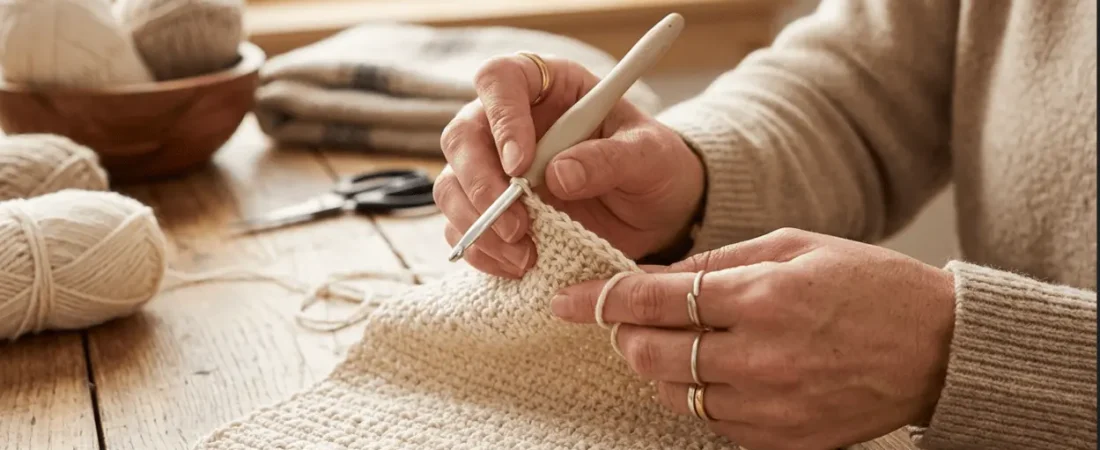
To hold a crochet hook comfortably, you have three main options: the pencil grip (holding the hook like a pen between your thumb and index finger), the knife grip (grasping the hook overhand like a dinner knife with your palm facing down), and the modified or hybrid grip (a personalized blend of the two). There is no single correct way. The best grip is simply the one that keeps your hand relaxed and free of pain during long crochet sessions. Below, we compare all three so you can find the one that feels like a natural extension of your hand.
Most guides on this topic only cover two grips. But experienced crocheters know a third option exists, and it is often the one people naturally settle into. Whether you are learning your very first stitch or troubleshooting hand fatigue years in, how you hold your hook affects your tension, your stitch consistency, and whether you can crochet for hours without your wrist aching.
Why Your Crochet Grip Actually Matters
When you first learn to crochet, all the attention goes to the stitches. The way you hold the tool gets skipped over, yet it is arguably the foundation of the entire craft. A grip that fights your natural hand mechanics leads to cramping fingers, wrist strain, and in the worst cases, enough discomfort to make you set the hobby down for good.
A good grip does three things. It keeps your tension even, so your stitches come out uniform. It lets the yarn glide through without you fighting it. And it distributes effort across your hand rather than concentrating strain in one finger or your wrist. If you ever notice yourself white knuckling the hook, that is your body telling you something needs to change.
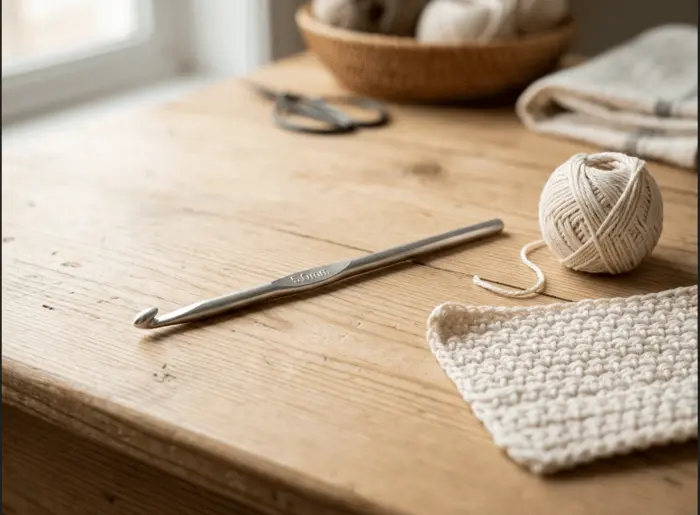
It also helps to know the parts of your hook. Most hooks have a head (the pointed working end), a throat, a shaft (the straight body where stitches are sized), a thumb rest (the flat indented section), and a handle. Where your fingers land on these parts is what separates one grip from another.
Grip 1: The Pencil Grip
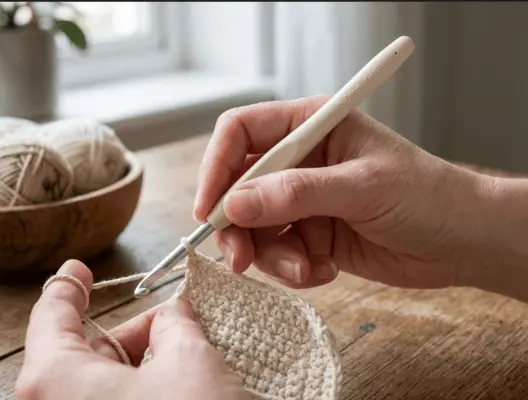
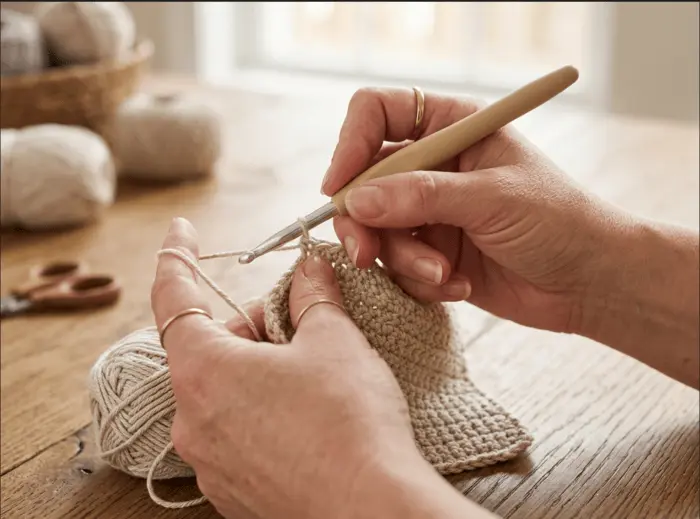
The pencil grip is exactly what it sounds like. You hold the hook the same way you hold a pen or pencil, pinched between your thumb and index finger, with the hook resting against your middle finger for support. The thumb rest is usually where your fingers naturally settle, and the hook tip points slightly downward.
Best for: Detailed, delicate work. Many amigurumi makers and lacework crocheters swear by the pencil grip because it gives fingertip level precision. When you are working fine yarn or tiny, intricate stitches, that fine motor control is a real advantage.
The upside: It feels flexible and natural to anyone comfortable holding a pen, and it excels at precise movements.
The downside: Some beginners find it less stable, and it can feel like it offers less raw power when you need to muscle your hook through very tight stitches or bulky yarn.
Grip 2: The Knife Grip
The knife grip, also called the overhand grip, positions your whole hand over the top of the hook, palm facing down, the way you would hold a dinner knife to cut into a steak. Your thumb and index finger rest on the flat thumb rest while your remaining fingers curl around the handle for support. Many people who use this grip guide the hook with an extended index finger.
Best for: Beginners and anyone working with thicker yarn. This is the most common starting grip, and for good reason. You have been holding knives and spoons your entire life, so the motion feels immediately familiar. It also gives you more leverage, which makes pulling through tight stitches or wrangling bulky yarn noticeably easier.
The upside: Stability, power, and a comfortable, palm supported hold that many find gentler over long sessions.
The downside: It can be slightly less precise for fine detail work, and if you let your wrist stiffen up while pivoting for each stitch, it can invite wrist strain. Keeping the wrist loose solves most of this.
Grip 3: The Modified (Hybrid) Grip
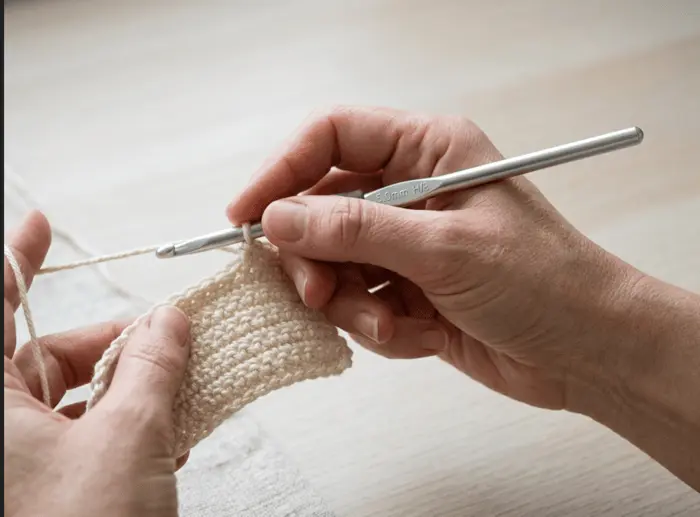
Here is the grip most tutorials leave out. The modified grip is any personal blend of the pencil and knife holds that your hand drifts toward on its own. You might hold the hook overhand like a knife but extend your index finger toward the head like a pencil user, or pinch it like a pen while resting the shaft deeper against your palm for stability.
Best for: Crocheters who feel that neither classic grip fits quite right, and those managing hand conditions. People with carpal tunnel, arthritis, or repetitive strain injuries often cannot commit fully to one grip, and a hybrid lets them borrow the comfort of each. Many self taught crocheters, and even longtime designers, land here without ever naming it.
The upside: It is completely tailored to your hand, which usually means the least fatigue of all.
The downside: There is no tutorial to follow because it is yours alone, so it takes a little experimenting to find.
Quick Comparison: Which Grip Should You Choose?
To decide between the three grips at a glance, think about your project and your comfort:
The pencil grip wins for precision work like amigurumi, fine yarn, and detailed motifs, and it suits lighter hooks and flowing wrist movement.
The knife grip wins for power and stability, making it ideal for beginners, bulky yarn, tight stitches, and larger projects like blankets where you want a firm, restful hold.
The modified grip wins for anyone whose hands do not cooperate with the standard two, especially crocheters managing pain or strain who need a fully customized hold.
Many seasoned crocheters do not pick just one. It is common to knife grip a chunky blanket and switch to a pencil grip for delicate amigurumi within the same week. Your grip can flex with the project.
How to Find Your Grip in Five Minutes
You do not have to overthink this. Try a simple experiment.
First, pick up your hook without any thought at all, just grab it the way your hand wants to. That instinctive hold is your natural starting grip, and it might be a knife, a pencil, or a nameless hybrid. All of them are valid.
Then spend a few minutes making chain stitches with each grip and pay attention to three things. Does your hand feel relaxed or tense? Can you move the hook fluidly while the yarn glides through? And where do you feel the effort, evenly spread or concentrated in your thumb or wrist? Some people know within thirty seconds which grip is theirs. Others need a few sessions. Both are normal.
Tips for Pain Free Crocheting With Any Grip
No matter which grip you land on, a few habits protect your hands over the long run.
Stay relaxed and resist the urge to grip tightly, since a loose hand lets the yarn flow and reduces strain. Take regular breaks to stretch your fingers and wrists during long projects. Consider an ergonomic crochet hook with a cushioned handle, which reduces pressure and is especially kind to hands prone to fatigue. And practice on a small swatch before committing a new grip to a big project, so you can feel whether it truly reduces fatigue and gives you uniform stitches.
Frequently Asked Questions
What is the correct way to hold a crochet hook?
There is no single correct way. The pencil grip, knife grip, and modified hybrid grip are all valid. The right one is whichever keeps your hand relaxed and your tension even without causing pain.
Is the knife grip or pencil grip better for beginners?
Most beginners find the knife grip easier because it feels familiar, like holding a dinner knife, and provides more stability and control. That said, some people naturally prefer the pencil grip from day one, so it is worth trying both.
Why does my hand hurt when I crochet?
Hand pain usually comes from gripping the hook too tightly, holding tension in your wrist, or using a grip that does not suit your hand. Loosen your hold, take breaks, and consider trying a different grip or an ergonomic hook.
Can I switch between crochet grips?
Yes. Many experienced crocheters switch grips depending on the project, using the knife grip for bulky yarn and the pencil grip for detailed amigurumi. Switching is a sign of comfort, not a mistake.
Does the grip affect my crochet tension?
It can. A grip that keeps your hand relaxed produces more consistent tension and more uniform stitches, while a strained grip often leads to stitches that are too tight or uneven.