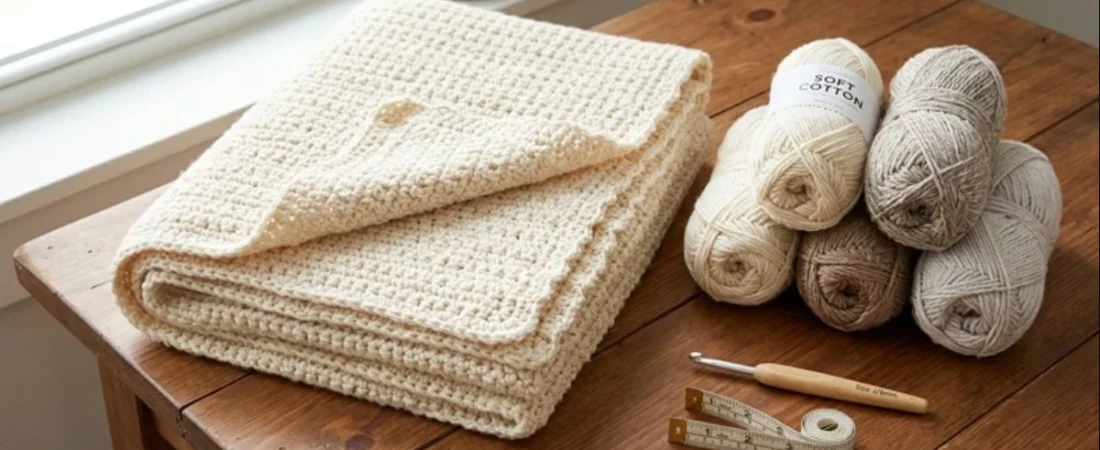
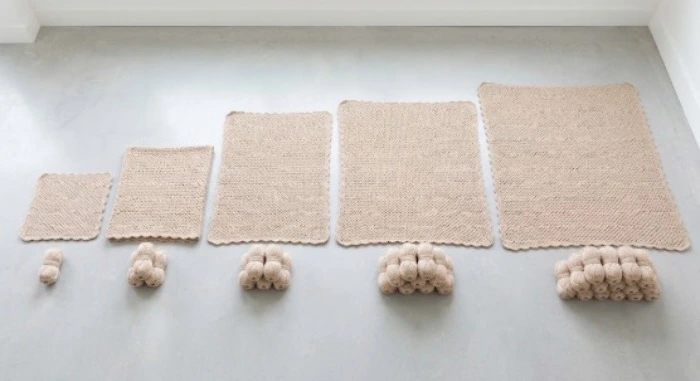
A baby blanket usually needs 700 to 1,100 yards of worsted weight yarn. A standard 50″ × 60″ throw needs about 1,500 to 2,500 yards, which is roughly 5 to 7 skeins of 364 yards. Bigger bed blankets can take 4,500 yards or more.
Running out of yarn halfway through a blanket is no fun. Buying twice what you need isn’t fun either.
This guide gives you real numbers for every common size, in yards and in skeins. It also shows you how to check the amount for your own pattern, because every crocheter and knitter works a little differently.
How Much Yarn Is Needed for a Blanket?
The short version is that it depends on the size of the blanket and the thickness of the yarn. The chart below uses worsted weight yarn (category 4) and a simple stitch like double crochet. Use it as a starting point.
Blanket yarn chart: yards and skeins
| Blanket size | Dimensions | Yards needed | Skeins (364 yd) | Skeins (200 yd) |
|---|---|---|---|---|
| Baby | 36″ × 36″ | 700–1,100 | 2–4 | 4–6 |
| Throw | 50″ × 60″ | 1,500–2,500 | 5–7 | 8–13 |
| Twin | 66″ × 90″ | 3,500–5,000 | 10–14 | 18–25 |
| Queen | 90″ × 100″ | 4,500–7,000 | 13–20 | 23–35 |
| King | 108″ × 108″ | 6,500–9,000 | 18–25 | 33–45 |
The low end is for loose stitches, like double crochet or an open pattern. The high end is for tight or dense stitches, like single crochet.
What changes how much yarn a blanket takes?
Five things move the number up or down:
- Size. Bigger blankets cover more area, so they need more yarn.
- Yarn weight. Thick yarn covers space faster than thin yarn.
- Stitch. Dense stitches use more yarn than open ones.
- Hook or needle size and tension. Tight work uses more yarn.
- Extras. Borders, color changes and fringe all add yardage.
How Much Yarn to Crochet a Blanket
Crochet is hungry for yarn. The stitches are taller and the fabric is thicker than most knit fabric, so crochet blankets usually take more yarn than knit ones of the same size.
How much yarn do I need for a crochet blanket?
It comes down to the stitch you choose. For a 50″ × 60″ throw in worsted weight, expect roughly this:
| Stitch | Typical yarn use |
|---|---|
| Double crochet | Lower end of the range |
| Granny squares | Middle of the range |
| Single crochet | Upper end, often 30–50% more than double crochet |
Textured stitches like waffle, bobble and puff stitch also use extra yarn, because the stitches are packed closer together.
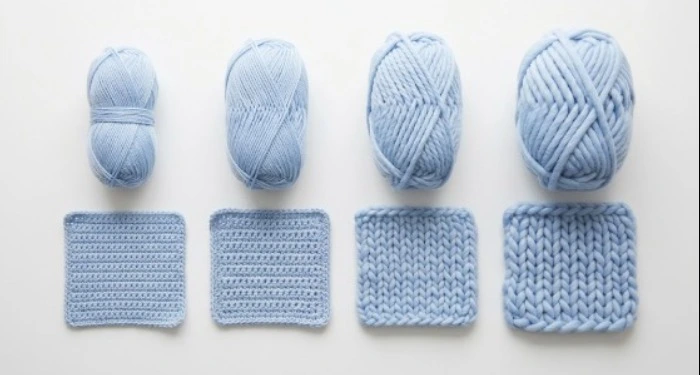
How yarn weight changes the amount (throw blanket)
| Yarn weight | Approx. yards for a throw |
|---|---|
| Light / DK (3) | 2,000–3,200 |
| Worsted (4) | 1,500–2,500 |
| Bulky (5) | 1,100–1,800 |
| Super bulky (6) | 700–1,300 |
Thick yarn needs fewer yards. But the skeins are often more expensive, and the blanket will be heavier.
Don’t forget the border
A simple border adds about 5–10% to your total. If you plan a wide ruffle or a fancy edging, add more.
How Many Yards of Yarn for a Blanket?
Yards are the number to trust. Skein sizes and weights vary from brand to brand, but a yard is always a yard.
Yards by blanket size
Use the chart near the top of this post. For a quick memory trick, a standard throw takes about 2,000 yards, a baby blanket about half of that, and a queen blanket about double.
How to work out your own yardage (swatch method)
This is the most accurate way. It takes about 20 minutes.
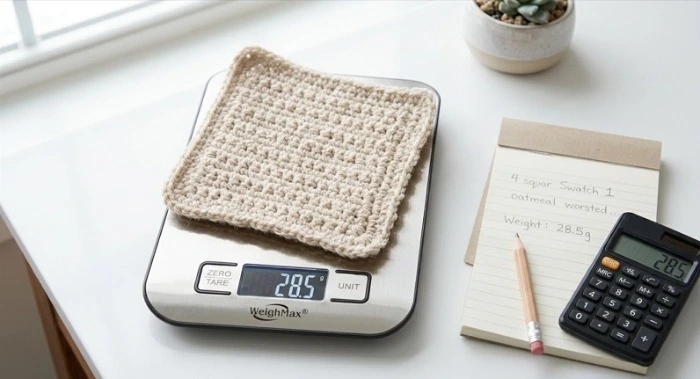
- Make a swatch in your chosen yarn, hook and stitch. Aim for about 4″ × 4″ (16 square inches).
- Weigh the swatch in grams on a kitchen scale.
- Work out the area of your blanket. A 50″ × 60″ throw is 3,000 square inches.
- Divide the blanket area by the swatch area, then multiply by the swatch weight.
Worked example: Your 4″ × 4″ swatch weighs 6 grams.
- 3,000 ÷ 16 = 187.5 swatches
- 187.5 × 6 g = 1,125 g of yarn
Now check the skein label. Say each skein is 198 g and 364 yards. That is about 1.84 yards per gram, so 1,125 g is about 2,070 yards. Divide by 364 and you get 5.7. Round up to 6 skeins, then add a safety buffer.
How Many Skeins of Yarn for a Blanket?
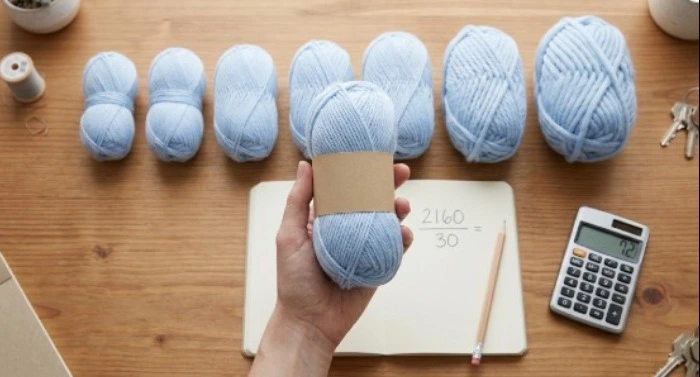
Skeins are what you actually put in the basket. Here is how to convert.
How to turn yards into skeins
Skeins = total yards needed ÷ yards per skein (round up)
Always check the yards on the label. A “skein” can be anything from 100 to 400 yards.
How many skeins of yarn for a throw blanket?
For a 50″ × 60″ throw in worsted weight:
- 364-yard skeins: about 5 to 7 skeins
- 200-yard skeins: about 8 to 13 skeins
- Bulky yarn: often 6 to 10 skeins, depending on yardage per skein
How much yarn do you need for a baby blanket?
A 36″ × 36″ baby blanket takes about 700 to 1,100 yards. That is 2 to 4 skeins of a 364-yard worsted yarn. Go up to 1,200 yards if you want it bigger or add a wide border.
Choose soft, washable yarn for babies. Cotton blends and soft acrylics are popular choices.
How Much Wool to Crochet a Blanket?
The amount of wool follows the same chart. The difference is the fiber.
- Wool is light and lofty, so you get plenty of yards per ounce.
- Cotton is heavy, so a cotton ball has fewer yards than a wool or acrylic ball of the same weight.
- Acrylic sits in the middle and is usually the cheapest.
The takeaway is to buy by yardage, not by weight. Two skeins can weigh the same and have very different yardage. If you switch fibers, work from the yards on the label, and expect to need more skeins with cotton.
Wool also relaxes and grows a little after washing. Block your swatch before you measure it.
How Much Yarn to Knit a Blanket
Knitting generally uses a bit less yarn than crochet for the same size. You can use the same chart as a ceiling and plan for the low end of each range.
Garter stitch is thicker and uses more yarn than stockinette. Cables and textured stitches use more again, because they pull the fabric in.
For the most accurate answer, knit a swatch and use the same weigh-and-scale method from above.
How to Avoid Running Out of Yarn
- Buy extra. Add 10–15% to your total.
- Match the dye lot. Colors can differ slightly between batches, and it shows in a blanket.
- Keep your labels and receipts. You may want to return unopened skeins.
- Swatch first. It takes 20 minutes and saves a lot of stress.
- Weigh as you go. If you are halfway through and have used more than half the yarn, you will know early.
Frequently Asked Questions
How much yarn do I need for a throw blanket?
A standard 50″ × 60″ throw needs about 1,500 to 2,500 yards of worsted weight yarn. That is roughly 5 to 7 skeins of 364 yards.
How many yards of yarn do I need for a blanket?
It depends on the size. A baby blanket takes about 700 to 1,100 yards, a throw about 1,500 to 2,500, and a queen about 4,500 to 7,000.
How many skeins of yarn for a blanket?
Divide the yards you need by the yards in one skein, then round up. A throw usually takes 5 to 7 skeins of 364 yards, or 8 to 13 skeins of 200 yards.
Does crochet use more yarn than knitting?
Usually, yes. Crochet stitches are taller and the fabric is thicker, so crochet blankets use more yarn than knit ones of the same size.
How much yarn do I need for a baby blanket?
About 700 to 1,100 yards of worsted weight for a 36″ × 36″ blanket. That is 2 to 4 skeins of 364 yards.
How much extra yarn should I buy?
Add 10–15% to your total. That covers mistakes, a border and the odd frogged row.
Final Thoughts
For most people, the answer is simple. A baby blanket takes 2 to 4 skeins, a throw takes 5 to 7, and a bed-sized blanket takes 13 or more of a 364-yard worsted yarn. Check the yards on your label, swatch if you can, and buy a little extra.
Planning your next project? Browse our Yarn Guides and blanket patterns for ideas, and use this chart whenever you shop.
Keep Learning
- Granny Square Blanket: Free Pattern & Step-by-Step Guide for Beginners
- Free Easy Crochet Baby Blanket Pattern for Beginners (Step by Step)
- Crochet Newborn Blanket Patterns: Free, Easy Designs Plus a Beginner Pattern You Can Start Today
Keep exploring: Browse every guide in our yarn guides.