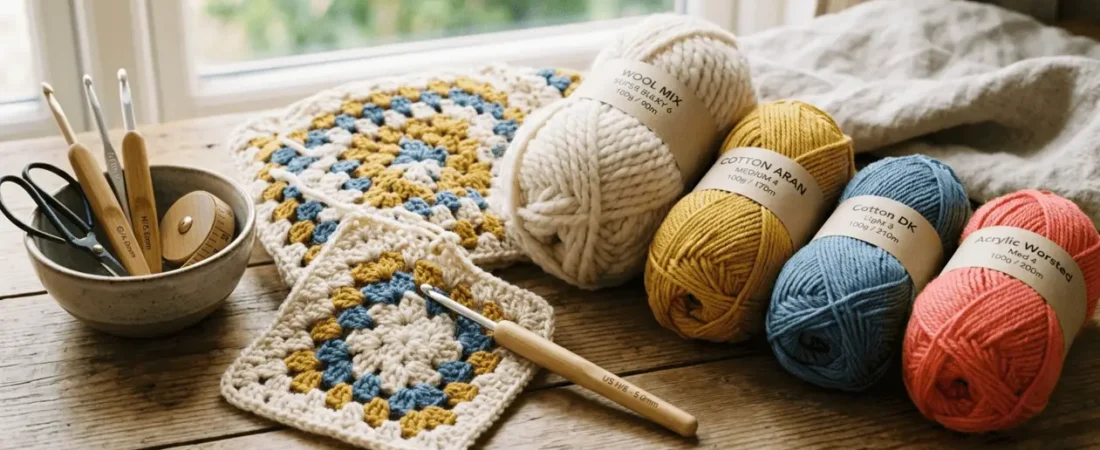
Standing in the yarn aisle for the first time is genuinely overwhelming. There are hundreds of colors, a dozen unfamiliar words on every label, and no obvious clue about which one won’t fight you while you’re still learning. Pick the wrong yarn and every stitch feels like a struggle. Pick the right one and crochet suddenly clicks.
So let’s cut through it. This guide gives you a fast answer first, then explains exactly how yarn is described so you can walk into any craft store or scroll any pattern and choose with confidence.
The short answer: For your first projects, choose a smooth, worsted-weight (category 4) acrylic or cotton yarn in a light, solid color, paired with a 5 mm (H-8) or 5.5 mm (I-9) crochet hook. It’s affordable, easy to see, forgiving of mistakes, and used in the majority of beginner patterns.
What is the best yarn for crochet beginners?
The best beginner yarn is smooth, medium (worsted) weight, and a light solid color. These three traits let you clearly see and count each stitch, which is what makes learning feel possible instead of frustrating. A basic acrylic worsted or a smooth cotton both fit the bill.
Everything about a good learning yarn comes down to one goal: you need to be able to see what you’re doing. When you can see each loop, you can count your stitches, spot a mistake right away, and understand how to fix it. Three qualities make that possible:
- Smooth texture — a plain, twisted strand slides on the hook and shows a clean stitch. Fuzzy, fluffy, or textured yarns hide your stitches completely.
- Medium thickness — thick enough that stitches are big and obvious, thin enough that the fabric doesn’t feel stiff.
- Light, solid color — a cream, soft grey, or pastel shows stitch shapes clearly. Dark and multicolor yarns swallow the detail.
Notice that softness and “prettiness” aren’t on that list. The gorgeous variegated skein is a reward for later right now, boring and visible wins.
Best yarn fibers for beginners
Fiber is what the yarn is made of. It decides how the yarn feels, how it behaves as you crochet, how the finished item should be washed, and what it’s suited for. You don’t need to know all of them yet just the handful you’ll actually meet on a shelf.
| Fiber | Feels like | Great for | Beginner-friendly? |
|---|---|---|---|
| Acrylic (synthetic) | Soft, springy, a little stretchy | Blankets, hats, toys, practice | Yes — cheap, everywhere, forgiving |
| Cotton (natural) | Firm, cool, little stretch | Dishcloths, bags, summer wear | Yes — crisp stitches, but less give |
| Wool (natural) | Warm, elastic, bouncy | Sweaters, winter accessories | OK — lovely to work with, costs more |
| Merino wool | Very soft, fine wool | Next-to-skin garments, baby items | OK — soft but pricier and delicate |
| Blends (e.g. acrylic + wool) | Balance of both fibers | Almost anything | Yes — often the best of both |
| Bamboo / alpaca | Silky, drapey / soft, warm | Special garments, shawls | Later — slippery or splitty for now |
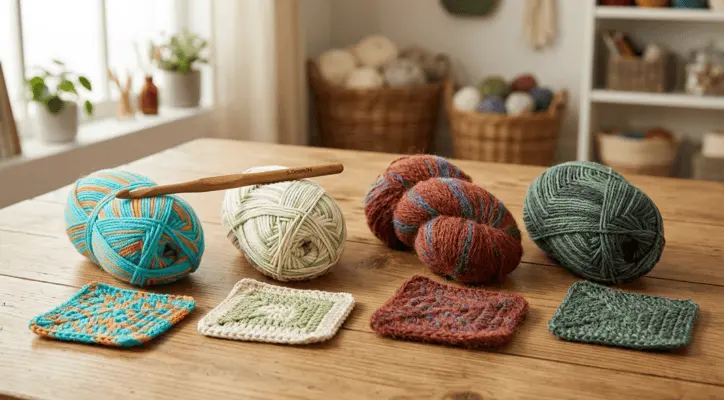
For your first few projects, acrylic and cotton are the two to reach for. Wool and blends are wonderful once you’re comfortable; the specialty fibers like bamboo and alpaca tend to split or slide, so they’re better saved for when your hands know what they’re doing.
Natural vs synthetic the quick version: Natural fibers (cotton, wool, bamboo) come from plants or animals: breathable, biodegradable, often pricier. Synthetic fibers (acrylic, polyester) are man-made: durable, machine-washable, budget-friendly. Neither is “better” they just suit different projects.
Understanding yarn weight
Yarn weight means the thickness of the strand not how heavy the ball is. Thinner yarn makes smaller, finer stitches; thicker yarn makes bigger, chunkier stitches and works up faster.
This is the single most useful concept to understand, because it’s the word patterns use most and the thing beginners get wrong most. The Craft Yarn Council groups yarn into a standard system numbered 0 to 7, from cobweb-thin lace up to arm-knitting jumbo. Here’s the whole system with the hook size that usually pairs with each.
| # | Weight name | Common names | Typical hook | Best for |
|---|---|---|---|---|
| 0 | Lace | Thread, cobweb | 1.5–2.25 mm (steel) | Doilies, fine shawls |
| 1 | Super fine | Fingering, sock, baby | 2.25–3.5 mm | Socks, delicate garments |
| 2 | Fine | Sport, baby | 3.5–4.5 mm | Lightweight tops, baby items |
| 3 | Light | DK, light worsted | 4.5–5.5 mm | Garments, baby blankets |
| 4 | Medium | Worsted, aran, 10-ply | 5–6.5 mm (H-8 to K) | Blankets, hats, scarves, toys |
| 5 | Bulky | Chunky, 12-ply | 6.5–9 mm | Quick blankets, warm accessories |
| 6 | Super bulky | Super chunky | 9–15 mm | Chunky blankets, baskets |
| 7 | Jumbo | Roving, arm-knitting | 15 mm+ | Oversized blankets, statement pieces |
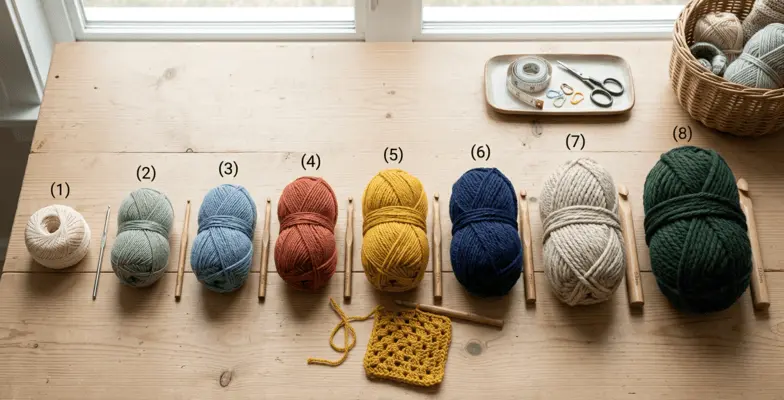
You’ll also see the word ply tossed around (4-ply, 8-ply). Ply originally counted the number of strands twisted together, but it isn’t a reliable measure of thickness anymore treat it as a rough regional hint, and trust the weight number on the label instead.
What yarn weight is best for beginners?
Worsted weight category 4 (also called medium or aran) is the best weight for beginners. It’s thick enough that every stitch is easy to see and count, but not so bulky that the fabric turns stiff, and it’s the weight most beginner patterns are written for.
If worsted is the “just right” choice, it helps to know why the neighbors don’t work as well. Thinner yarns (lace, fingering) make tiny stitches that are hard to see and slow to practice on. Very bulky yarns feel fun and grow fast, but they can be awkward to hold and exaggerate uneven tension. Worsted sits in the sweet spot — which is exactly why it’s the classic recommendation, paired with a comfortable 5 mm or 5.5 mm hook.
Acrylic vs cotton: which is better for crochet?
Neither is universally better it depends on the project. Choose acrylic for soft, warm, affordable, easy-care items like blankets, hats, and toys. Choose cotton for crisp stitch definition, structure, and washable practicality think dishcloths, bags, and summer wear.
These are the two fibers you’ll compare most often, so it’s worth understanding how they actually differ on the hook.
| Acrylic | Cotton | |
|---|---|---|
| Feel | Soft, springy, warm | Firm, cool, structured |
| Stretch | Has “give” easier on the hook | Little stretch can tire the hands |
| Stitch look | Slightly softer, fuzzier | Crisp, sharply defined |
| Holds its shape | Can stretch over time | Excellent great for bags & baskets |
| Absorbency | Low (not for dishcloths) | High (ideal for dishcloths/towels) |
| Cost & care | Cheapest, machine-washable | Pricier, usually machine-washable |
| Best mindset | Cozy & forgiving | Structured & practical |
A note on why they behave so differently: acrylic was invented as a wool substitute, so it mimics wool’s bounce and drape. Cotton has almost no elasticity, which is precisely what gives it that clean, sculptural stitch. That firmness is a gift for a structured tote and a small annoyance for a floppy scarf.
Best yarn for different crochet projects
Once you’re past pure practice, the smartest move is to match your yarn to what you’re making. There’s no single “best yarn” the right pick shifts with the project’s job. Here’s a practical starting point for the most common beginner makes.
| Project | Recommended fiber | Weight | Why it works |
|---|---|---|---|
| Crochet blanket | Acrylic or blend | Worsted / bulky | Soft, warm, affordable in big quantities, machine-washable |
| Baby blanket | Soft acrylic or cotton blend | DK / worsted | Gentle on skin, easy-wash, hypoallergenic |
| Scarf | Wool, acrylic, or blend | Worsted | Wants softness and drape; some stretch helps |
| Hat | Wool or acrylic | Worsted | Needs stretch and warmth to hug the head |
| Sweater | Wool, merino, or blend | DK / worsted | Elasticity gives shape and recovery; breathable |
| Cardigan | Wool blend or cotton blend | DK / worsted | Drape matters for an open front; blends balance shape and comfort |
| Amigurumi (toys) | Cotton or firm acrylic | Sport / DK / worsted | Firm stitches with no gaps; holds crisp shapes |
| Dishcloth | Cotton (100%) | Worsted | Absorbent, durable, handles heat and washing |
| Bag / tote | Cotton | Worsted / aran | Holds its shape under weight, won’t sag |
| Granny square | Acrylic or cotton | Worsted | Clear stitches make the pattern easy to follow and join |
Amigurumi tip: For stuffed toys, work with a hook one or two sizes smaller than the yarn label suggests. Tighter stitches close up the gaps so the stuffing stays hidden the opposite of what you want for a drapey scarf.
How to read a yarn label
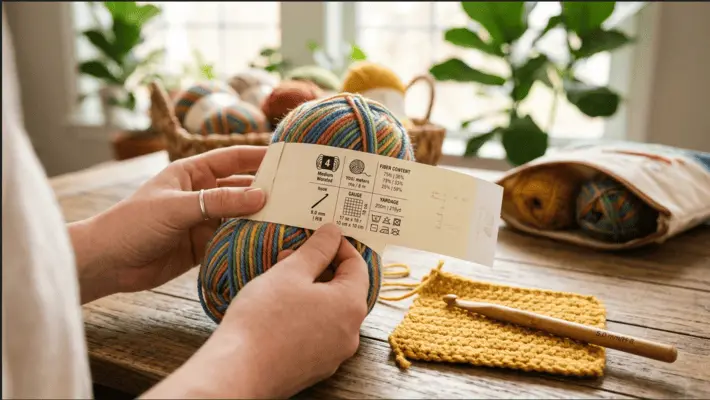
The paper band around a ball of yarn packs in almost everything you need to choose well. Once you can read it, you’ll never be lost in the aisle again. Here’s what each part is telling you:
- Weight symbol — the little yarn-ball icon with a number 0–7 showing thickness.
- Fiber content — what it’s made of, e.g. “100% acrylic” or “80% cotton, 20% polyester.”
- Recommended hook size — a suggested crochet hook to start with, in mm and letter sizing.
- Gauge — how many stitches and rows fit in a 4-inch (10 cm) square at that hook. This is how patterns predict finished size.
- Yardage / meterage — how much yarn is in the ball. Compare this, not weight in grams, when working out how many balls a project needs.
- Care instructions — washing and drying symbols. Check before gifting anything.
- Dye lot number — the batch the color was dyed in. Two balls of the “same” color from different lots can differ subtly, so buy enough of one lot to finish your project.
How to choose yarn for a crochet pattern
When you follow a pattern, it will name a specific yarn or, more helpfully, a weight and a gauge. You don’t have to buy the exact yarn pictured you just need to match those two things. Here’s the reliable order to work through:
- Match the weight first. If the pattern calls for worsted, buy a category 4 yarn. This matters more than brand or color.
- Check the fiber suits the purpose. A dishcloth pattern in acrylic won’t absorb water swap to cotton even if the weight matches.
- Buy enough yardage. Total the yardage the pattern needs, then divide by the yardage per ball, and round up. Grab an extra ball for safety.
- Make a gauge swatch if size matters. For a scarf, skip it. For a fitted hat or sweater, crochet a small square and check your stitch count against the pattern adjust your hook up (looser) or down (tighter) to match.
Choosing the right crochet hook
Match your hook to your yarn weight, and start with the size on the yarn label. For beginner-friendly worsted yarn, a 5 mm (H-8) or 5.5 mm (I-9) hook is the comfortable, forgiving choice.
Hook size and yarn weight are two halves of one decision. Too small a hook for the yarn makes stiff, cramped fabric; too large makes loose, holey fabric. The label’s recommendation is your safe default. A budget-friendly starter set of 3.5, 4, 5, 5.5, 6, and 8 mm hooks will carry you through most common projects. If your finished swatch comes out too small, move up a hook size; too big, move down.
Ergonomic hooks: If your hand cramps, a hook with a soft, padded grip makes a real difference on longer sessions. It won’t change your stitches — just your comfort.
Best yarn colors for beginners
Color is the trap that catches almost every new crocheter. The rainbow skein is tempting, but it will actively work against you while you learn. Stick with these until your stitches are steady:
- Light and solid — cream, beige, soft grey, pastel blue or pink. Stitches cast clear shadows you can read.
- Avoid dark colors — black and navy hide stitch definition, so you’ll squint and miscount.
- Avoid variegated and multicolor — the shifting colors camouflage exactly the loops you’re trying to find.
Once you can crochet without staring, the whole color wall opens up. This is a temporary training-wheels rule, not a life sentence.
Yarn beginners should avoid (for now)
A few yarn types are genuinely lovely but will make your first weeks harder than they need to be. Save these for later:
- Fuzzy or “eyelash” novelty yarn — hides stitches entirely; you can’t see where the hook goes.
- Chenille and velvet yarn — beautiful and soft, but prone to “worming” (twisting out) and hard to un-work when you make a mistake.
- Boucle — the looped texture snags the hook and obscures stitches.
- Very dark or multicolored yarn — see the color section above.
- Lace and fingering weight — the stitches are too small to learn on comfortably.
- Slippery fibers (bamboo, silk) — they slide off the hook and split easily.
Common beginner yarn mistakes
Almost everyone makes at least one of these early on. Knowing them in advance saves a lot of frustration:
- Choosing yarn for looks, not learnability. The prettiest skein is usually the hardest to see.
- Ignoring the weight when following a pattern. Using bulky where worsted was specified changes the whole finished size.
- Grabbing the biggest hook to “go faster.” A hook too large for the yarn creates loose, gappy fabric.
- Buying too few balls, or mismatched dye lots. Running out mid-project and finding a slightly different shade is a classic heartbreak.
- Skipping the yarn label. Everything you need weight, hook, care is printed right there.
- Working too tightly. A tension habit more than a yarn issue, but stiff yarn makes it worse. Relax your grip and let the yarn flow.
Yarn substitution basics
Sooner or later you’ll want to use a yarn other than the one a pattern names because of budget, availability, or color. Substituting works fine as long as you match the important things:
- Match the weight category above all else. Worsted for worsted, DK for DK.
- Compare yardage per ball, not grams. Different fibers weigh different amounts, so cotton and acrylic of the “same” size can have very different yardage.
- Check the gauge on both labels if they’re close, you’re in good shape. If size matters, swatch to confirm.
- Consider how the fiber behaves. Swapping stretchy acrylic for stiff cotton in a hat will change how it fits, even at the same weight.
Handy trick: No worsted on hand? Hold two strands of DK together and they roughly equal one worsted strand a great way to use up leftovers.
Quick beginner yarn cheat sheet
- Fiber: Acrylic or cotton
- Weight: Worsted (category 4 / medium / aran)
- Color: Light and solid cream, grey, pastel
- Hook: 5 mm (H-8) or 5.5 mm (I-9)
- Texture: Smooth and plain no fuzz, no loops
- First projects: Dishcloth, scarf, or granny square
Frequently asked questions
What is the easiest yarn to crochet with?
Smooth, worsted-weight acrylic in a light solid color. It slides nicely on the hook, has a bit of forgiving stretch, and shows each stitch clearly so you can count and fix as you go.
What yarn weight is best for beginners?
Worsted weight (category 4, also called medium or aran). The stitches are large enough to see easily but not so bulky that the fabric turns stiff, and most beginner patterns are written for it.
Is acrylic or cotton better for crochet?
Neither is universally better. Acrylic is soft, warm, affordable, and forgiving ideal for blankets, hats, and toys. Cotton gives crisp stitch definition and holds its shape ideal for dishcloths, bags, and summer wear. Choose based on the project.
What yarn is best for crochet blankets?
Soft acrylic or an acrylic blend in worsted or bulky weight. Blankets need a lot of yarn, so affordability and machine-washability matter, and acrylic delivers both while staying cozy.
What yarn is best for amigurumi?
Cotton or a firm acrylic in sport-to-worsted weight, worked with a hook a size or two smaller than the label suggests. The tighter stitches close up gaps so stuffing won’t peek through.
What does yarn weight mean?
Yarn weight is the thickness of the strand, not how heavy the ball is. It ranges from category 0 (lace) to category 7 (jumbo). Thicker yarn makes bigger stitches and works up faster.
How much yarn do I need for a beginner project?
Check the pattern’s total yardage, then divide by the yardage printed on your yarn ball and round up. A small dishcloth might need one ball; a scarf two or three; a blanket several. Always buy extra from the same dye lot.
Can I use any yarn with any crochet hook?
You can, but you shouldn’t for best results. Match the hook to the yarn weight the label’s recommended size is your safe starting point.