
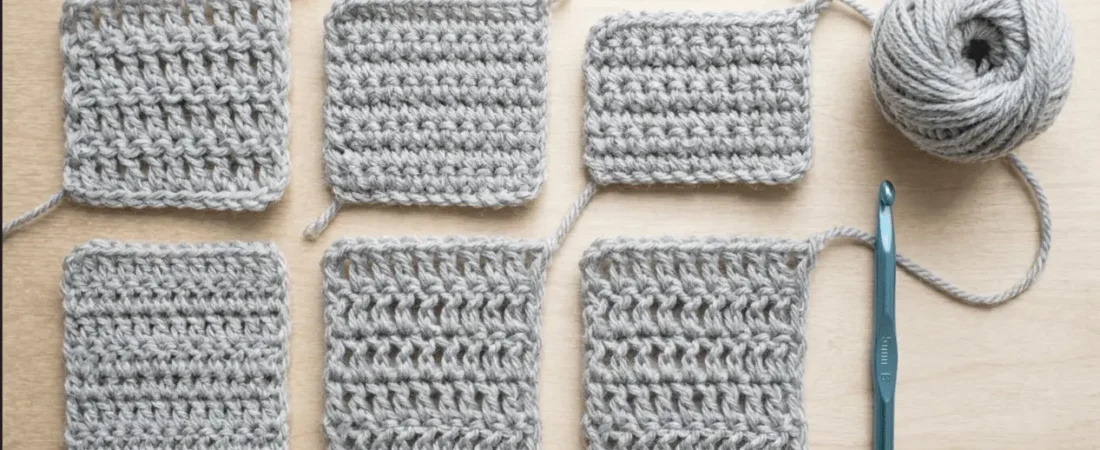
The 6 basic crochet stitches every beginner needs are the chain stitch, slip stitch, single crochet, half double crochet, double crochet, and treble crochet. Once you learn these six, you can follow almost any beginner crochet pattern, including the free patterns and tutorials on this site.
Crochet looks complicated when you watch someone else do it, but it really comes down to repeating a small handful of movements. Learn these six stitches properly, practice them a few times each, and you will be ready to make dishcloths, scarves, granny squares, and even simple amigurumi within a week or two.
What Makes These 6 Stitches “Basic”
These six stitches are called basic because almost every crochet pattern on the planet is built from them. A blanket pattern is just single crochet and double crochet repeated in a grid. A granny square is chain stitches and double crochet grouped into clusters. A scarf might use half double crochet for a soft, dense fabric. Learn these six, and you already understand the DNA of most patterns you will ever pick up.
Tools You Need Before You Practice Any Stitch
Grab these before you start:
- A size H (5mm) crochet hook, which is comfortable for most beginners
- One skein of medium weight (worsted weight, category 4) yarn in a light color so you can see your stitches clearly
- A pair of scissors
- A yarn needle for weaving in ends later
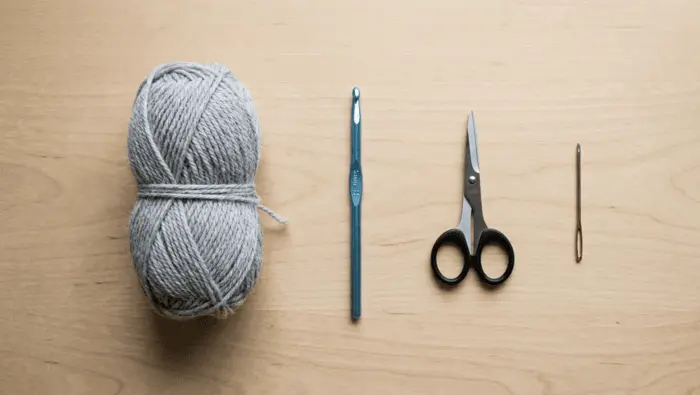
You do not need stitch markers or a gauge swatch for this stage. Just yarn, a hook, and a bit of patience.
1. Chain Stitch (ch)
The chain stitch is the very first thing you make in almost every crochet project. It creates the foundation row that everything else sits on top of.
How to make it:
- Make a slip knot on your hook.
- Wrap the yarn over the hook (called a yarn over).
- Pull that loop through the loop already on your hook.
- Repeat step 2 and 3 until your chain reaches the length your pattern calls for.
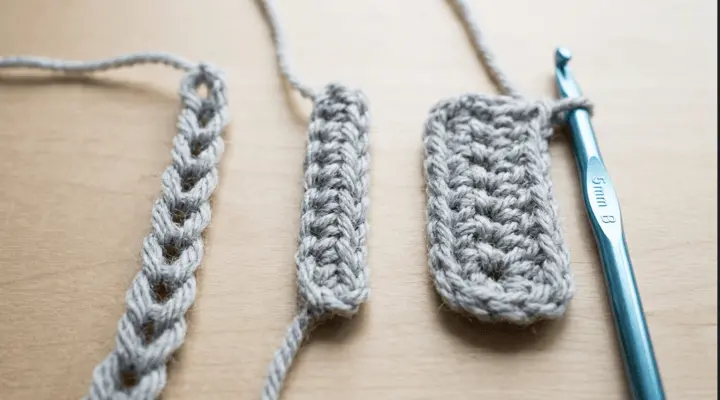
Where you will use it: Starting rows, turning chains at the end of a row, and decorative spaces in lacy patterns.
Common mistake to avoid: Pulling each chain too tight. If your hook barely fits into the chain when you start row two, loosen your tension a little.
2. Slip Stitch (sl st)
The slip stitch is the shortest stitch in crochet. It does not add height to your work, which is exactly why it is so useful.
How to make it:
- Insert your hook into the next stitch.
- Yarn over.
- Pull the yarn through both the stitch and the loop on your hook in one motion.
Where you will use it: Joining rounds (like the first round of a granny square), moving across stitches without adding bulk, and finishing off edges.
Common mistake to avoid: Crocheters often work slip stitches too tightly, which puts stress on the join. Keep your tension relaxed here.
3. Single Crochet (sc)
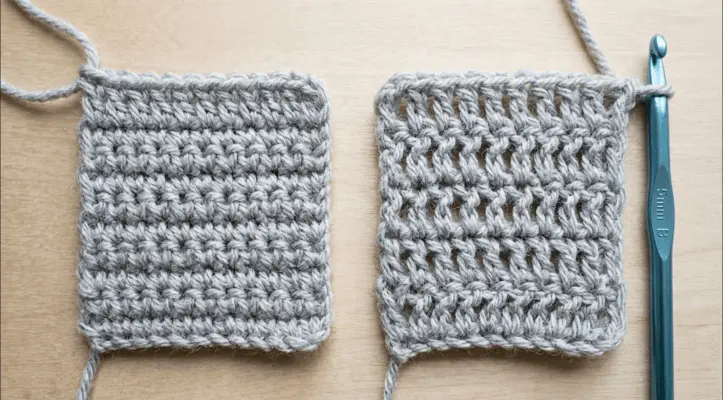
Single crochet is usually the first “real” stitch beginners learn after the chain. It creates a tight, dense fabric, which makes it perfect for dishcloths, coasters, and amigurumi where you don’t want stuffing to show through.
How to make it:
- Insert your hook into the next stitch.
- Yarn over and pull up a loop. You now have two loops on your hook.
- Yarn over again and pull through both loops. One loop remains on your hook.
Where you will use it: Dishcloths, potholders, amigurumi bodies, and any project that needs a firm, sturdy fabric.
Common mistake to avoid: Losing count of stitches at the end of a row. Count your total stitches every few rows until this becomes automatic.
4. Half Double Crochet (hdc)
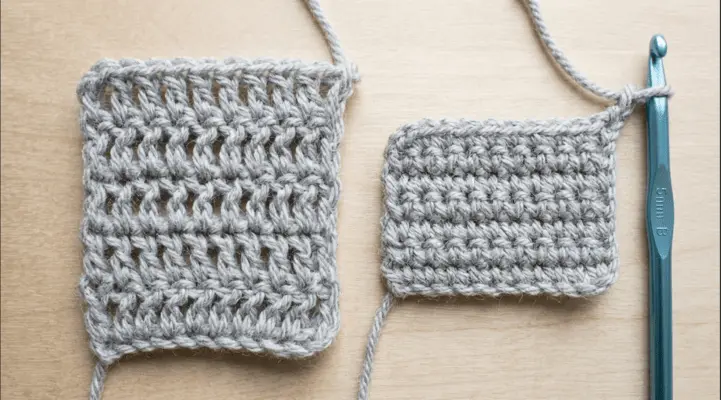
Half double crochet sits right between single crochet and double crochet in height. It gives you a fabric that is softer and more flexible than single crochet but still fairly dense, which is why it shows up so often in beanies and scarves.
How to make it:
- Yarn over before you insert your hook (this is what makes it different from single crochet).
- Insert your hook into the next stitch and pull up a loop. You now have three loops on your hook.
- Yarn over once more and pull through all three loops at the same time.
Where you will use it: Beanies, cowls, scarves, and blankets where you want warmth without excessive stiffness.
Common mistake to avoid: Forgetting the first yarn over before inserting the hook. If your hdc looks identical to your sc, this is usually the reason.
5. Double Crochet (dc)
Double crochet is one of the most common stitches in crochet patterns. It works up faster than single crochet because each stitch is taller, and it creates a fabric with a bit more drape and movement, which makes it a favorite for blankets, granny squares, and cardigans.
How to make it:
- Yarn over.
- Insert your hook into the next stitch.
- Yarn over and pull up a loop. You now have three loops on your hook.
- Yarn over and pull through the first two loops only. Two loops remain.
- Yarn over again and pull through the last two loops.
Where you will use it: Granny squares, afghans, cardigans, and almost any project where you want to cover ground quickly.
Common mistake to avoid: Skipping the very first stitch of the row by accident. Many patterns ask you to work into the second chain from the hook for dc rows, and it’s an easy stitch to miss.
6. Treble Crochet (tr), Also Called Triple Crochet
Treble crochet is the tallest of the six basic stitches. It produces an open, lacy fabric, which makes it ideal for lightweight shawls, summer tops, and decorative trims.
How to make it:
- Yarn over twice.
- Insert your hook into the next stitch.
- Yarn over and pull up a loop. You now have four loops on your hook.
- Yarn over and pull through two loops. Three loops remain.
- Yarn over and pull through two more loops. Two loops remain.
- Yarn over one final time and pull through the last two loops.
Where you will use it: Lacy shawls, summer tops, decorative edgings, and openwork blankets.
Common mistake to avoid: Losing track of how many loops are left on your hook partway through. Slow down on this stitch until the rhythm feels natural.
US Terms vs UK Terms: Know Before You Start a Pattern
This trips up a lot of new crocheters. The same stitch name can mean two different things depending on where a pattern was written.
| US Term | UK Term |
|---|---|
| Single crochet (sc) | Double crochet (dc) |
| Half double crochet (hdc) | Half treble crochet (htr) |
| Double crochet (dc) | Treble crochet (tr) |
| Treble crochet (tr) | Double treble crochet (dtr) |
Every free pattern on this site uses US crochet terms, so if you are following along here, you can use the instructions above exactly as written.
Easy Practice Projects for Each Stitch
You don’t need to just make swatches. Try one small project per stitch so you actually retain what you learn:
- Chain and slip stitch: a simple bookmark or drawstring for a bag
- Single crochet: a basic dishcloth or coaster
- Half double crochet: a beginner beanie
- Double crochet: a classic granny square
- Treble crochet: a small lacy scarf or a decorative edging on a finished project
How Long It Takes to Learn These 6 Stitches
Most beginners can learn all six stitches within a week of short daily practice sessions, around 15 to 20 minutes a day. Single crochet and chain stitch usually click within the first day. Half double, double, and treble crochet take a little longer only because you are managing more loops on the hook at once, but the motion becomes automatic with repetition.
Frequently Asked Questions
What is the easiest crochet stitch to learn first?
The chain stitch is the easiest and always comes first, followed closely by single crochet, since both use simple, repetitive motions with minimal loops on the hook.
Do I need to learn all 6 basic stitches before starting a project?
No. You can start a dishcloth project after learning just the chain stitch and single crochet. Add the other stitches as your patterns call for them.
What is the difference between single crochet and double crochet?
Single crochet creates a shorter, denser stitch with fewer yarn overs, while double crochet is taller, works up faster, and produces a fabric with more drape.
Why does my crochet look different from the picture in a pattern?
This usually comes down to tension, hook size, or mixing up US and UK stitch terms. Check which terminology your pattern uses before troubleshooting anything else.
Can I learn crochet without watching video tutorials?
Yes, written instructions like the ones above work well for many learners, though pairing them with a short video the first time you try each stitch can help you catch small details like hook placement.
How many stitches should I practice before trying a real pattern?
Once you’re comfortable with chain stitch, slip stitch, and single crochet, you have enough to start a real beginner pattern. Add half double, double, and treble crochet as you go.
Once these six stitches feel comfortable in your hands, you’re ready to explore the free beginner patterns and tutorials on this site and start your first real project with confidence.